Good heelwork is one of the foundations of gundog training. However, some dogs naturally make it more challenging than others.
A young Labrador may be keen to get onto the training ground. A Spaniel may become excited when watching another dog retrieve. You may also have a strong dog that understands heelwork but continues to forge ahead.
These situations can all require a little more control from the handler. This is where a Figure of 8 Lead can be useful.
Rather than simply trying to hold a dog back through strength, it gives the handler more influence over the dog’s head and direction. Used correctly, it can help reinforce calm heelwork and improve control around distractions. It can also support the transition towards reliable lead and off-lead work.
We would always view a Figure of 8 Lead as a gundog training aid rather than the finished solution. The aim is to use the additional control when required while continuing to develop the dog’s heelwork and handler focus.
In this guide, we’ll look at how to fit a Figure of 8 Lead, how it works and some of the situations where we would suggest using one.
What Is a Figure of 8 Lead?
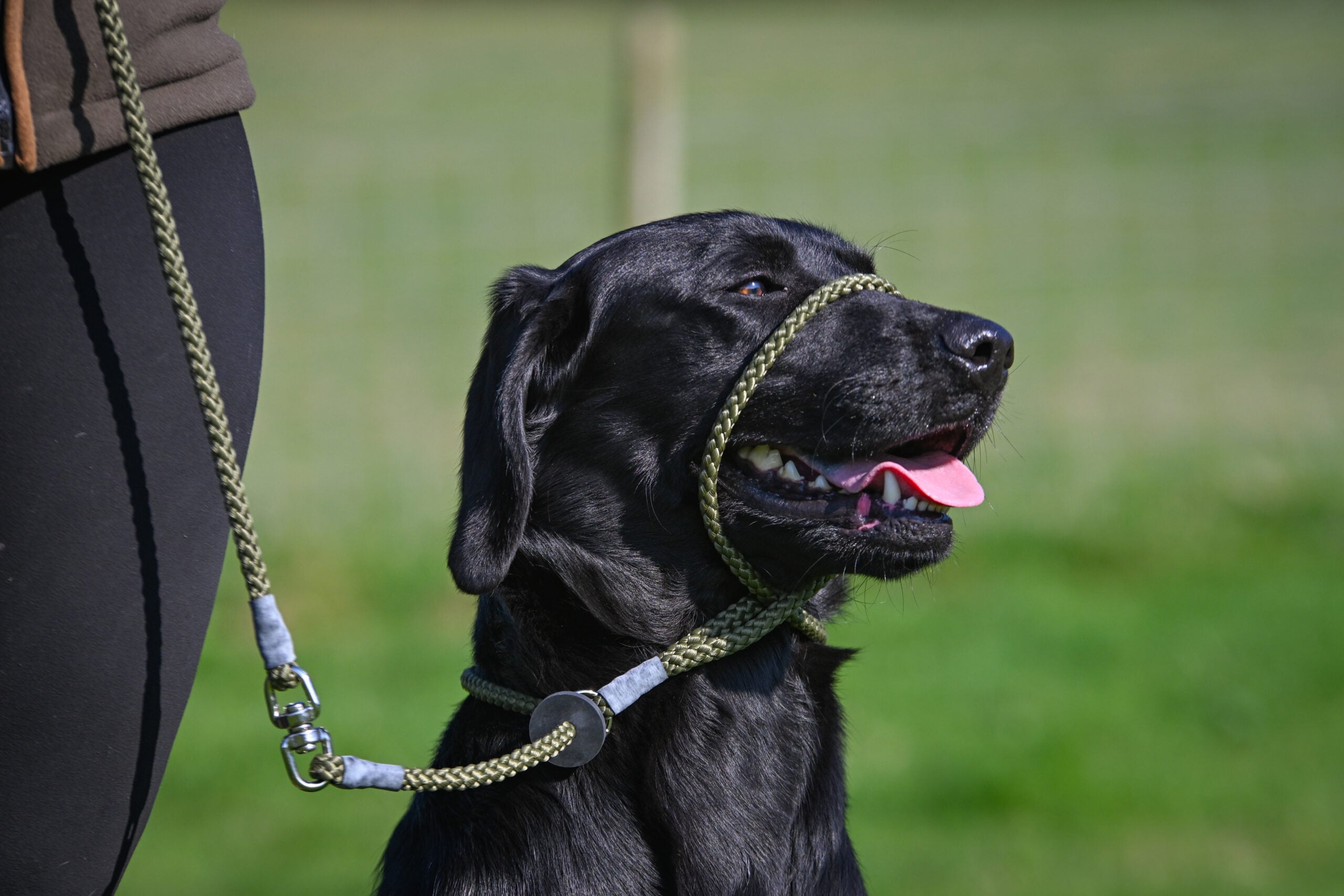
A Figure of 8 Lead is a training lead that sits around both the dog’s neck and nose. This creates the distinctive figure-of-eight shape.
The principle behind it is simple. Greater control over the position of the dog’s head gives the handler more influence over the direction of the dog.
This can be particularly useful with a strong or enthusiastic gundog. Simply pulling backwards against a conventional lead can quickly become a contest of strength.
When using the lead, only apply pressure when you need to guide the dog. Release that pressure as soon as the dog returns to the required position.
A correctly fitted Figure of 8 Lead is not a muzzle. It should not hold the dog’s mouth closed. The dog should still be able to open its mouth and pant normally.
When Would We Suggest Using a Figure of 8 Lead?
Not every gundog needs one. For many dogs, a traditional slip lead will be all that is required. However, there are certain situations where we would consider a Figure of 8 Lead particularly useful.
For a Gundog That Pulls or Forges Ahead
Your dog may understand the general idea of heelwork but continually push ahead of the correct position. In this situation, a Figure of 8 Lead can provide extra directional control and help reinforce where you want the dog to be.
This can be particularly useful with larger, powerful breeds. Continually trying to restrain a strong dog through the neck alone is neither comfortable nor particularly productive.
For an Excitable Dog Around Training
Many working dogs behave very differently when they realise training is about to begin.
A dog may walk perfectly well during a normal outing but start pulling as soon as you approach the training field. Seeing another dog retrieve, hearing a shot or watching a dummy being thrown can also increase excitement.
That excitement is understandable, but normal standards of heelwork should still apply. A Figure of 8 Lead can give you extra control while you reinforce those standards. This can be particularly useful when the dog is keen to get on with the next retrieve.
For Moving Between Gundog Training Exercises
Some of the most useful moments for a Figure of 8 Lead aren’t during the exercise itself.
You may need to move a dog back into line after a retrieve or walk between training areas. You may also need to keep an excitable youngster settled while another dog works. All of these situations can test a dog’s heelwork and steadiness.
For handlers working in these situations, a lightweight gundog training lead that provides additional control can be a very practical piece of kit.
For Young Gundogs Progressing Through Training
A young dog may understand what heel means but lack the self-control to maintain it when distractions increase. A Figure of 8 Lead can be useful during this stage, particularly in busier training environments.
The intention should be to rely on it less as the dog’s behaviour develops. You don’t want to create a dog that only walks correctly when wearing a particular type of lead.
How to Fit a Figure of 8 Lead
Correct fitting is important. The lead needs to remain secure and provide effective control without unnecessarily restricting the dog.
- Place the main loop over the dog’s head. Put the larger loop over the dog’s head so it sits around the neck like a conventional slip lead.
- Bring the lead underneath the chin. Take the lead underneath the dog’s chin and cross or twist it once to create a smaller second loop.
- Place the smaller loop over the nose. Carefully guide the second loop over the dog’s nose. Make sure it sits securely without interfering with the eyes.
- Check the fit. Make sure the dog can still open its mouth normally. The lead should provide control without clamping the dog’s mouth shut.
- Check that the lead releases freely. Apply a small amount of pressure and then release it. The lead should relax again as soon as you remove the tension.
Using a Figure of 8 Lead for Gundog Heelwork
The biggest mistake with any training lead is relying on constant tension. If the lead remains permanently tight, the dog has little indication of when it has returned to the correct position.
Instead, start with the dog alongside you in its normal heel position. Keep your lead hand relaxed.
If the dog begins to forge ahead, use a small, controlled movement through the lead alongside your normal heel command. Relax the pressure as soon as the dog returns to the correct position.
Correct position = loose lead.
Moving out of position = guidance from the handler.
Over time, your dog should increasingly respond to your voice, body position and established commands. You should need less physical guidance from the lead as its heelwork develops.
For many handlers, the aim will eventually be to progress back onto a traditional gundog slip lead once the dog’s heelwork is sufficiently reliable.
Real Gundog Training Situations Where It Can Help
Don’t think of a Figure of 8 Lead purely as a solution for a dog that pulls on a normal walk. Instead, consider the actual training and working situations where you may need additional control.
- Walking an excitable dog onto a training ground.
- Keeping a young dog settled while another dog retrieves.
- Moving back into line after completing a retrieve.
- Maintaining heelwork around other dogs and handlers.
- Walking towards an area where the dog expects a retrieve.
- Controlling a strong dog when excitement levels increase.
- Reinforcing heel position before progressing to off-lead work.
- Moving calmly between different training exercises.
These are often the moments where a dog already knows what you expect but enthusiasm gets the better of it. The Figure of 8 Lead simply gives you another way to reinforce that expected behaviour.
Figure of 8 Lead or Traditional Gundog Slip Lead?
We wouldn’t suggest replacing the traditional slip lead simply because a Figure of 8 Lead offers more control.
A good gundog slip lead remains one of the most practical pieces of equipment for training and working dogs. It’s lightweight, quick to put on and remove, and ideal for a trained dog with established heelwork.
A Figure of 8 Lead is more appropriate when you genuinely need additional control.
For example, we wouldn’t introduce one to a dog that already walks calmly at heel on a conventional slip lead. There would be little benefit.
However, we would consider one for a strong or enthusiastic dog that understands heelwork but repeatedly pulls as excitement increases.
Think of the Figure of 8 Lead as a tool for a particular training requirement. It isn’t something every gundog needs.
Getting Your Dog Used to a Figure of 8 Lead
Some dogs accept having a lead over their nose immediately. Others may paw at it or try to remove it because the sensation is unfamiliar.
For that reason, don’t introduce it for the first time immediately before a long training session. Fit the lead for short periods in a controlled environment and get the dog moving.
You can then introduce familiar heelwork and obedience exercises. Once the dog is comfortable, progress to more distracting training environments.
There is no benefit in turning the introduction into a battle. Calm, short sessions are normally much more productive.
Using a Figure of 8 Lead Safely
As with any piece of gundog training equipment, how you use the lead matters just as much as the equipment itself.
- Keep your lead hand relaxed rather than maintaining constant tension.
- Use controlled movements rather than continually pulling against the dog.
- Release pressure as soon as the dog returns to the required position.
- Never jerk or sharply yank the lead.
- Make sure the loop remains correctly positioned on the dog’s nose.
- Make sure the dog can still open its mouth normally.
- Never leave a Figure of 8 Lead on an unattended dog.
- Use the lead alongside consistent heelwork and obedience training.
Most importantly, remember that the lead supports the training – it shouldn’t replace it.
The Sporting Saint Figure of 8 Lead
Our Sporting Saint Figure of 8 Lead is a practical training and handling lead for dogs that require additional control.
We make it from strong braided rope and keep the overall construction lightweight. This makes it practical for regular gundog training and field use.
The lead also has a swivel positioned halfway down its length. This helps reduce twisting if an excitable dog moves or circles around its handler. It also reduces the chance of the lead becoming tangled around your hand.
- 1.5m overall length
- Strong braided rope construction
- Figure of 8 design for additional directional control
- Mid-lead swivel to help reduce twisting and tangling
- Lightweight and practical for training and field use
- Olive Green as standard
- Bespoke colours from our Gundog Range can also be made to order
It’s compact enough to carry alongside the rest of your gundog training equipment. You can quickly introduce it when you need a little more control.
Shop the Sporting Saint Figure of 8 Lead >
Frequently Asked Questions
What is a Figure of 8 Lead used for?
A Figure of 8 Lead gives the handler additional control over the direction of the dog’s head. It can be particularly useful for strong gundogs that pull, young dogs developing heelwork and excitable dogs around training.
Is a Figure of 8 Lead suitable for gundog training?
Yes. We consider it a useful gundog training aid when a handler needs additional control. It can be particularly useful for heelwork or managing an enthusiastic dog around distractions.
Use it to support consistent training rather than replace it.
Can I use a Figure of 8 Lead on a Labrador or Spaniel?
You can use Figure of 8 leads with Labradors, Spaniels, Retrievers, HPRs and other working breeds. Always make sure the lead fits correctly and suits the individual dog.
Will a Figure of 8 Lead stop my dog pulling?
It can give you considerably more control over a dog that pulls, but the lead itself doesn’t teach permanent heelwork.
Use the additional control to reinforce the correct heel position. As your dog’s training progresses, gradually reduce your reliance on the lead.
Is a Figure of 8 Lead a muzzle?
No. The loop passes over the dog’s nose to provide directional control, but it should not prevent the dog from opening its mouth. A correctly fitted Figure of 8 Lead should allow the dog to pant normally.
When should I stop using a Figure of 8 Lead?
There is no set timeframe. If you use one because your dog pulls or struggles with heelwork, aim to rely on it less as the dog’s behaviour improves.
For many gundog handlers, the next step is a conventional slip lead. Where appropriate, reliable off-lead heelwork can then become the longer-term goal.
A Training Aid, Not a Shortcut
A Figure of 8 Lead can be an extremely useful addition to a gundog training kit. It can be particularly helpful for a strong, enthusiastic or easily distracted dog.
Its main value isn’t simply stopping the dog from pulling. Instead, it gives you greater control while you reinforce good heelwork, steadiness and focus.
Ultimately, you want the dog to maintain those standards without assistance. Used correctly, the progression is simple: control through the lead to control through training.